
Introduction
Salat is an extremely important act of worship, as we all know, but its acceptance depends on adherence to the true faith. Therefore, rewards of offering Salat are subject to those conditions without which it will be of no benefit. The first and foremost is the ‘The Wilayah’ (a total submission to the Divine Orders of Allah-azwj, Rasool-Allah-saww and Imams-asws, as explained by Masomeen-asws in Ahadith).
This short article explains the Salat recitation. However, prior to reciting Salat, one must be ‘Tahir’ (clean) of body and clothes, in a place where it is permissible to offer Salat, Zakat having been paid or going to pay Zakat (Salat is not accepted without paying Zakat, which must be paid to a momin), have performed Wuzu. For detailed Ahadith on Salat please refer to two articles Salat Part 1&2 at www.hubeali.com (http://hubeali.com/articles/Salat-and-its-Recognition-part-I.pdf, http://hubeali.com/articles/Salat%20Part%20II.pdf) as well as Al-Kafi, Vol. 3 (chapters on Salat).
عَلِيُّ بْنُ إِبْرَاهِيمَ عَنْ أَبِيهِ عَنِ ابْنِ أَبِي عُمَيْرٍ عَنِ ابْنِ أُذَيْنَةَ عَنْ فُضَيْلِ بْنِ يَسَارٍ عَنْ أَبِي عَبْدِ اللَّهِ ( عليه السلام ) قَالَ الْفَرِيضَةُ وَ النَّافِلَةُ أَحَدٌ وَ خَمْسُونَ رَكْعَةً مِنْهَا رَكْعَتَانِ بَعْدَ الْعَتَمَةِ جَالِساً تُعَدَّانِ بِرَكْعَةٍ وَ هُوَ قَائِمٌ الْفَرِيضَةُ مِنْهَا سَبْعَةَ عَشَرَ رَكْعَةً وَ النَّافِلَةُ أَرْبَعٌ وَ ثَلَاثُونَ رَكْعَةً .
Ali Bin Ibrahim, from his father, from Ibn Abu Umeyr, from Ibn Azina, from Fuzeyl Bin Yasaar,
(It has been narrated) from Abu Abdullah-asws having said: ‘The Obligatory and the optional (Salāts) are fifty one Rak’at – from it are two Rak’at after the night (to be prayed) seated, counted as one Rak’at prayed while one is standing. The Obligatory from these are seventeen Rak’at, and the optional are thirty-four Rak’at’.[1] Please see Ahadith in the attached document ‘Number of Rakaat’.
Wuzu (Ablution) and Ghusal (Bathing):
Prior to Salat one must perform Wuzu – before Wuzu one must be clean, wear clean clothes. One should also know what makes Wuzu invalid. The maximum quality of water for Wuzu is (approx. 750ml) upon using more water Wuzu becomes invalid, whether to dry face and hands, please see Ahadith in the attached document ‘Wuzu’. Some Ahadith on ‘Ghusal’.
Salat Niyah (Intention) and Recitation:
For offering Salat, one should have legitimate right to the place where one intends to offer Salat. The Salat recitation for men and women is the same but the standing, bowing and sitting postures are different. These are explained under a separate heading ‘instructions for ladies Salat’. Prior to offering Salat, one may like to read, the attached documents, ‘Prerequisites of Salat’, and ‘Salat Niyah and praying regularly’.
Azan and Aqamah
وَ فِي رِوَايَةِ الْعَبَّاسِ بْنِ هِلَالٍ عَنْ أَبِي الْحَسَنِ الرِّضَا ع أَنَّهُ قَالَ:- مَنْ أَذَّنَ وَ أَقَامَ صَلَّى وَرَاءَهُ صَفَّانِ مِنَ الْمَلَائِكَةِ وَ إِنْ أَقَامَ بِغَيْرِ أَذَانٍ صَلَّى عَنْ يَمِينِهِ وَاحِدٌ وَ عَنْ شِمَالِهِ وَاحِدٌ ثُمَّ قَالَ اغْتَنِمِ الصَّفَّيْنِ.
And it has been narrated from Al-Abbas Ibn Hilal that he has heard it from Abi Al-Hassan Al-Reza-asws said: Whoever recites Salat after saying Azan and Aqamah, two rows of the angels recites Salat behind him but if he had recited Salat after only saying Aqamah then one angel will stand on his right side and one on his left side (to recite Salat) and then (Imam-asws) said, ‘It is best to settle for the two rows (of angels – meaning to recite both Azan and Aqamah).[2]
Further Ahadith on Azan and Aqamah are given in the attached file ‘Excellence of Azan and Aqamah’.
The Salat Starts with ‘Takbir’
وَ عَنْهُ عَنْ أَبِيهِ عَنْ حَمَّادٍ عَنْ حَرِيزٍ عَنْ زُرَارَةَ عَنْ أَبِي جَعْفَرٍ ع قَالَ: إِذَا قُمْتَ فِي الصَّلَاةِ فَكَبَّرْتَ فَارْفَعْ يَدَيْكَ وَ لَا تُجَاوِزْ بِكَفَّيْكَ أُذُنَيْكَ أَيْ حِيَالَ خَدَّيْكَ.
It is a narration from him (narrator of previous Hadith) by his father from Hammad from Hariz from Zurarah who has said:
‘Abu Ja’far-asws has said: ‘When you stand up for Salat say Takbir (Allah-azwj is great beyond description) and raise your hands. But do not allow your palms (hands) to rise higher than your ears. Keep them on the sides of your face.’[3]
Salawat
جَمَاعَةٌ عَنْ أَحْمَدَ بْنِ مُحَمَّدٍ عَنِ الْحُسَيْنِ بْنِ سَعِيدٍ عَنِ النَّضْرِ بْنِ سُوَيْدٍ عَنْ عَبْدِ اللَّهِ بْنِ سِنَانٍ عَنْ عَبْدِ اللَّهِ بْنِ سُلَيْمَانَ قَالَ سَأَلْتُ أَبَا عَبْدِ اللَّهِ ( عليه السلام ) عَنِ الرَّجُلِ يَذْكُرُ النَّبِيَّ ( صلى الله عليه وآله ) وَ هُوَ فِي الصَّلَاةِ الْمَكْتُوبَةِ إِمَّا رَاكِعاً وَ إِمَّا سَاجِداً فَيُصَلِّي عَلَيْهِ وَ هُوَ عَلَى تِلْكَ الْحَالِ فَقَالَ نَعَمْ إِنَّ الصَّلَاةَ عَلَى نَبِيِّ اللَّهِ ( صلى الله عليه وآله ) كَهَيْئَةِ التَّكْبِيرِ وَ التَّسْبِيحِ وَ هِيَ عَشْرُ حَسَنَاتٍ يَبْتَدِرُهَا ثَمَانِيَةَ عَشَرَ مَلَكاً أَيُّهُمْ يُبَلِّغُهَا إِيَّاهُ .
A group, from Ahmad Bin Muhammad, from Al Husayn Bin Saeed, from Al Nazar Bin Suweyd, from Abdullah Bin Sinan, from Abdullah Bin Suleyman who said,
‘I asked Abu Abdullah-asws about the man who remembers the Prophet-saww and it was during the Prescribed Salāt, either while in the Rukū, or while prostrating, whether he can send Blessings (Salawat) upon him-saww while is upon that state’. So he-asws said: ‘Yes. The sending of Blessings (Salawat) upon the Prophet-saww of Allah-azwj is like the exclamation of Takbīr and the Glorification, and it is with ten Rewards. Eighteen Angels manage it to deliver it to him-saww’.[4]
Several supplications before and after offering Salat are recommended by the Masomeen-asws, find for example some in: ‘Supplications before and after Salat’.
Imam Jafar-e-Sadiq-asws Started Salat by Saying ‘اللَّهُ أَكْبَرُ’
Abu ‘Abd Allah-asws stood up straight facing the direction of Qiblah. Imam-asws allowed his hands to rest on his thighs, with his fingers close side by side, kept his feet near each other, only leaving between them a distance of three fingers opened up, with his toes facing the direction of Qiblah without allowing them to deviate from this direction and with humbleness said: ‘اللَّهُ أَكْبَرُ’’ ‘Allah is Great beyond description.’
Imam-asws then recited Al-Hamd (the first Chapter of the Holy Quran) with clarity and fluency and Chapter 112 (Qul ho Wallah ho Ahad) of the Holy Quran. Imam-asws then paused for a breath while still standing and raised his hands up to the sides of his face and said: ‘اللَّهُ أَكْبَرُ’’ while still.
For more Ahadith on reciting Bismillah loudly and Al-Hamd, sura Inna Anzalna (Chapter 97) and Qul ho Wallah ho Ahad (as one has to say three time at the end of Qul ho Wallah كَذَلِكَ اللَّهُ رَبِّي كَذَلِكَ اللَّهُ رَبِّي كَذَلِكَ اللَّهُ رَبِّي) please see: ‘Loud Recitation of Bismillah, Chapter 97 and 112’.
Ruku (Hadith continues)
Imam-asws then bent down for Ruku’ (kneeling). Imam-asws then placed his palms over his knees allowing them to be filled up with his knees that were separate from each other, and pressed them backward until his-asws back became so straight level that even had there been a drop of water or oil it would not flow to any side. He stretched his neck forward, lowered his eyes and then said with clarity and fluency three times,
‘سُبْحَانَ رَبِّيَ الْعَظِيمِ وَ بِحَمْدِهِ’ (I praise my Allah-azwj, the Great, Who is free of all defects).’
Additional reference:
(Amir-ul-Momineen Imam Ali-asws says): Extend your neck when you bow down (Ruku) and offer your head to be chopped down for His-azwj cause.[5]
Standing from Ruku (Hadith continues):
Imam-asws then stood up straight. While standing straight Imam-asws said:
‘سَمِعَ اللَّهُ لِمَنْ حَمِدَهُ’ ‘Allah-azwj Hears all those who praise Him.’ Imam-asws then while standing raised his hands up to the sides of his face and said: ‘اللَّهُ أَكْبَرُ’
Then Imam-asws bowed down for sajdah. Imam-asws opened his palms with his fingers closed side by side, placed them near his knees on the sides next to his face and said: ‘سُبْحَانَ رَبِّيَ الْأَعْلَى وَ بِحَمْدِهِ’ ‘I praise my Allah, the most High who is free of all defects,’ three times.
Additional reference:
(It has been narrated) from Abu Abdullah-asws having said: ‘When you raise your head from the Rukū, so straighten your back, for there is no Salāt for the one who does not straighten his back’.[6]
Performing of the ‘Sajdah’ (Hadith on Salat continues)
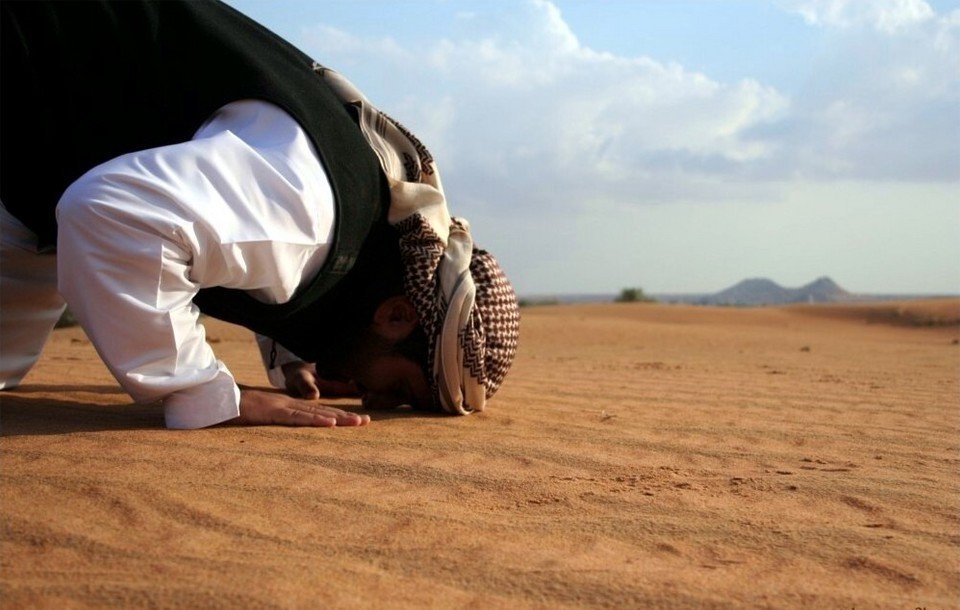
The Imam-asws did not place any other part of his body on any other part thereof. He-asws performed sajdah on eight parts of his-asws limbs:
- his palms, (2)
- knees, (2)
- big toes of his feet, (2)
- his forehead and (1)
- his nose. (1)
The Imam-asws said: ‘Placing seven parts of these limbs on the ground is obligatory during sajdah but one of them (the nose) is not obligatory. This is what Allah-azwj has spoken of in the Quran, “The parts of the body to be placed on the ground during sajdah belong to Allah, you then must not worship anyone other than Allah” (72: 17). Such parts are forehead, palms, knees and big toes of feet. Placing one’s nose on the ground is optional.’
Additional reference: on the place of Sajdah
‘Abu ‘Abd Allah-asws has said, ‘You must not perform Sajdah on anything except for earth or on what grows from earth except for cotton and linen.’[7]
Additional reference: on Placing the Forehead on the Ground
Imam Abu Jafar-asws said: ‘The entire forehead, from the hairline to the eyebrows is for Sajdah, even if the part of this area that goes on the ground is the size of a dirham or is the size of a finger’s tip, then that area is sufficient.’[8]
Sitting Posture between two ‘Sajuds’ (Hadith on Salat continues)
Imam-asws then raised his head from sajdah. While moving into (sitting posture) Imam-asws recited: اللَّهُ أَكْبَرُ’.’ Imam-asws then sat on his left thigh placing the back of his right foot over the sole of his left foot and then said:
أَسْتَغْفِرُ اللَّهَ رَبِّي وَ أَتُوبُ إِلَيْهِ ‘
(I seek forgiveness from Allah-azwj, my Allah-azwj and turn to Him-azwj in repentance).’
Imam-asws then said: اللَّهُ أَكْبَرُ’.’ Then he-asws bowed down for the second sajdah, saying therein what Imam-asws had said in the first sajdah
‘سُبْحَانَ رَبِّيَ الْأَعْلَى وَ بِحَمْدِهِ’
(three times).
Imam-asws did not place any other part of his body on any other part during Ruku’ or sajdah. Imam-asws spread his elbows and did not place his-asws arms on the ground.
In this way, Imam-asws performed two Rak’ats of Salat. Imam-asws kept the fingers of his hands close side by side when reciting Tashud[9] in a sitting position (similar to sitting between two Sajuds-prostrations). When Imam-asws finished saying the Tashud, Imam-asws then read ‘Salam’ and ended the Salat.’[10] See the complete Hadith ‘Imam–asws showed how to offer Salat’.
Additional reference: (Amir-ul-Momineen Imam Ali-asws says): And when you sit on your left hand side while your right foot crosses the sole of your left foot, we symbolically indicate that we have established the righteous path and have annihilated the falsehood.[11]
Reciting Al-Qunut
Imam ‘Abu ‘Abd Allah-asws (our 6th Imam-asws) has said: ‘It is sufficient for Al-Qunut to say,
اللَّهُمَّ اغْفِرْ لَنَا وَ ارْحَمْنَا وَ عَافِنَا وَ اعْفُ عَنَّا فِي الدُّنْيَا وَ الْآخِرَةِ إِنَّكَ عَلَى كُلِّ شَيْءٍ قَدِيرٌ
“O Allah-azwj, Forgive us, Grant us Mercy, good health and Pardon us in this world and in the next life; You-azwj have power over all things.’[12]
Reciting Tashud
Additional reference: (Amir-ul-Momineen Imam Ali-asws says): In the ‘Tashud’ we renew our ‘Eman’ and the resumption of Islam and approval of death and resurrection after death.[13]
اشهد ان لا اله الا الله وحده لا شريك له، واشهد ان محمدا عبده ورسوله، واشهد ان علي وَلِيَّ الله اللَّهُمَّ صَلِّ عَلَى مُحَمَّدٍ وَ آلِ مُحَمَّد السَّلَامُ عَلَيْنَا وَ عَلَى عِبَادِ اللَّهِ الصَّالِحِينَ وَ رَحْمَتُ اللَّهِ وَ بَرَكاتُ
See a longer version of Tashud in: ‘Tashud’
Standing after two Sajuds (after 1st and 3rd Rakat)
بِإِسْنَادِهِ عَنْ مُحَمَّدِ بْنِ أَحْمَدَ بْنِ يَحْيَى عَنْ يَعْقُوبَ بْنِ يَزِيدَ عَنْ مُحَمَّدِ بْنِ الْحَسَنِ بْنِ زِيَادٍ عَنْ مُحَمَّدِ بْنِ أَبِي حَمْزَةَ عَنْ عَلِيِّ بْنِ الْحَزَوَّرِ عَنِ الْأَصْبَغِ بْنِ نُبَاتَةَ قَالَ: كَانَ أَمِيرُ الْمُؤْمِنِينَ ع إِذَا رَفَعَ رَأْسَهُ مِنَ السُّجُودِ قَعَدَ حَتَّى يَطْمَئِنَّ ثُمَّ يَقُومُ
By his chain, from Muhammad Bin Ahmad Bin Yahya, from Yaqoub Bin Yazeed, from Muhammad Bin Al Hassan Bin Ziyad, from Muhammad Bin Abu Hamza, from Ali Bin Al Hazawwir, from Al Asbagh Bin Nubata who said,
‘Amir-ul-Momineen-asws, whenever he-asws raised his-asws head from the Sajdahs, he-asws would (remain) seated until he-asws was at rest, then he-asws would be standing.
فَقِيلَ لَهُ يَا أَمِيرَ الْمُؤْمِنِينَ كَانَ مِنْ قَبْلِكَ أَبُو بَكْرٍ وَ عُمَرُ إِذَا رَفَعُوا رُءُوسَهُمْ مِنَ السُّجُودِ نَهَضُوا عَلَى صُدُورِ أَقْدَامِهِمْ كَمَا تَنْهَضُ الْإِبِلُ
So it was said to him-asws, ‘O Amir-ul-Momineen-asws! It so happened from before you-asws, Abu Bakr and Umar, whenever they raised their heads from the Sajdahs, they arose upon the base of their feet just as the camel tends to rise’.
فَقَالَ أَمِيرُ الْمُؤْمِنِينَ ع إِنَّمَا يَفْعَلُ ذَلِكَ أَهْلُ الْجَفَاءِ مِنَ النَّاسِ إِنَّ هَذَا مِنْ تَوْقِيرِ الصَّلَاةِ.
So Amir-ul-Momineen-asws said: ‘But rather, that is done by the people of aversion from the people. Verily this is from the dignity of the Salat. [14]
اجلسوا بعد السجدتين حتى تسكن جوارحكم ثم قوموا فإن ذلك من فعلن
(Amir-ul-Momineen-asws says in a long Hadith) After the two Sajdahs of the Salat, you should sit until your organs repose (become stationary), then you may stand up. This is our-asws practice.[15]
What to recite when standing up for the next Rakat:
وَ بِهَذَا الْإِسْنَادِ عَنْ فَضَالَةَ بْنِ أَيُّوبَ عَنْ سَيْفِ بْنِ عَمِيرَةَ عَنْ أَبِي بَكْرٍ الْحَضْرَمِيِّ قَالَ قَالَ أَبُو عَبْدِ اللَّهِ ( عليه السلام ) إِذَا قُمْتَ مِنَ الرَّكْعَةِ فَاعْتَمِدْ عَلَى كَفَّيْكَ وَ قُلْ.
And by this chain, from Fazalat Bin Ayoub, from Sayf Bin Ameyra, from Abu Bakr Al hazramy who said,
‘Abu Abdullah–asws said: ‘When you stand from the (completed) Rak’at, so rely upon your palms and say,
بِحَوْلِ اللَّهِ وَ قُوتِهِ أَقُومُ وَ أَقْعُدُ
‘By the Might of Allah–azwj and His–azwj Strength I am standing and sitting’,
فَإِنَّ عَلِيّاً ( عليه السلام ) كَانَ يَفْعَلُ ذَلِكَ
For Ali–asws used to do that’.[16]
Salat Ends With Salam
عَلِيُّ بْنُ مُحَمَّدٍ عَنْ سَهْلِ بْنِ زِيَادٍ عَنْ جَعْفَرِ بْنِ مُحَمَّدٍ الْأَشْعَرِيِّ عَنِ الْقَدَّاحِ عَنْ أَبِي عَبْدِ اللَّهِ ع قَالَ قَالَ رَسُولُ اللَّهِ ص افْتِتَاحُ الصَّلَاةِ الْوُضُوءُ وَ تَحْرِيمُهَا التَّكْبِيرُ وَ تَحْلِيلُهَا التَّسْلِيمُ.
Ali Bin Muhammad, from Sahl Bin Ziyad, from Ja’far Bin Muhammad Al Ashary, from Al Qaddah,
(It has been narrated) from Abu Abdullah-asws having said: ‘Rasool-Allah-saww said: ‘Wuzu (Ablution) is the opening of the Salaat and Takbeer marks it (opening), and the greetings (saying Salam) end it’.[17]
مُحَمَّدُ بْنُ يَحْيَى عَنْ أَحْمَدَ بْنِ مُحَمَّدٍ عَنِ الْحُسَيْنِ بْنِ سَعِيدٍ عَنْ فَضَالَةَ بْنِ أَيُّوبَ عَنِ الْحُسَيْنِ بْنِ عُثْمَانَ عَنِ ابْنِ مُسْكَانَ عَنِ الْحَلَبِيِّ قَالَ قَالَ لِي أَبُو عَبْدِ اللَّهِ ( عليه السلام ) كُلُّ مَا ذَكَرْتَ اللَّهَ بِهِ وَ النَّبِيَّ ( صلى الله عليه وآله ) فَهُوَ مِنَ الصَّلَاةِ وَ إِنْ قُلْتَ السَّلَامُ عَلَيْنَا وَ عَلَى عِبَادِ اللَّهِ الصَّالِحِينَ فَقَدِ انْصَرَفْتَ .
Muhammad Bin Yahya, from Ahmad Bin Muhammad, from Al Husayn Bin Saeed, from Fazalat Bin Ayoub, from Al Husayn Bin Usman, from Ibn Muskan, from Al Halby who said,
‘Abu Abdullah-asws said to me: ‘Whatever you say of Allah-azwj and His-azwj Prophet-saww is of Salāt. As soon as you say the phrase, ‘The greetings be upon us and the righteous servants of Allah-azwj’, so you have ended (the Salāt)’.[18]
وَ بِهَذَا الْإِسْنَادِ عَنِ ابْنِ مُسْكَانَ عَنْ أَبِي بَصِيرٍ قَالَ قَالَ أَبُو عَبْدِ اللَّهِ ( عليه السلام ) إِذَا كُنْتَ فِي صَفٍّ فَسَلِّمْ تَسْلِيمَةً عَنْ يَمِينِكَ وَ تَسْلِيمَةً عَنْ يَسَارِكَ لِأَنَّ عَنْ يَسَارِكَ مَنْ يُسَلِّمُ عَلَيْكَ وَ إِذَا كُنْتَ إِمَاماً فَسَلِّمْ تَسْلِيمَةً وَ أَنْتَ مُسْتَقْبِلُ الْقِبْلَةِ .
And by this chain, from Ibn Muskan, from Abu Baseer who said,
‘Abu Abdullah-asws said: ‘Whenever you were in a row, so greet (Salām) with a greeting from your right, and a greeting from your left, because on your left is the one who is greeting upon you; and when you were the prayer leader and you greet, so greet while you are facing the Qiblah’.[19]
إذا انفتلت من صلاتك فعن يمينك
(Amir-ul-Momineen-asws says in a long Hadith) Look (by only turning eyes) the right side when you finish from offering the Salat.[20]
‘Salat end at Salam Recitation’.
Tasbih and supplications after the Salat:
عَلِيُّ بْنُ مُحَمَّدٍ عَنْ سَهْلِ بْنِ زِيَادٍ عَنْ مُحَمَّدِ بْنِ عَبْدِ الْحَمِيدِ عَنْ صَفْوَانَ عَنِ ابْنِ مُسْكَانَ عَنْ أَبِي بَصِيرٍ عَنْ أَبِي عَبْدِ اللَّهِ ( عليه السلام ) قَالَ فِي تَسْبِيحِ فَاطِمَةَ ( صلوات الله عليها ) يُبْدَأُ بِالتَّكْبِيرِ أَرْبَعاً وَ ثَلَاثِينَ ثُمَّ التَّحْمِيدِ ثَلَاثاً وَ ثَلَاثِينَ ثُمَّ التَّسْبِيحِ ثَلَاثاً وَ ثَلَاثِينَ .
Ali Bin Muhammad, from Sahl Bin Ziyad, from Muhamad Bin Abdul Hameed, from Safwan, from Ibn Muskaabn, from Abu Baseer,
(It has been narrated) from Abu Abdullah-asws having said: ‘In the Glorification (Tasbīḥ) of Fatima-asws, it is begun with the exclamation of Takbīr thirty four (times), then the Praise (The Praise is for Allah-azwj) thirty three (times), then the Glorification (Glory be to Allah-azwj) thirty three (times)’.[21]
Some Ahadith on supplications after Salat are included in: ‘Supplication after Salat’
Sajdah-e-Shukr:
There are several Ahadith which recommend supplications in the Sajdah, some are included in the: ‘Sajdah-e-Shukar’
Standing and Sitting Manners in Salat for Men and Women:
Standing, sitting manners for women are different from those of men, see the ‘Sitting and standing manners for woman’ and ‘Sitting and standing manners for man’.
Acceptance and elevation of Salat:
Some Ahadith are compiled to highlight what makes one’s Salat accepted and how to elevate its status, see the: ‘Acceptance and Elevation of Salat’.
[1] Al Kafi V 3 – The Book Of Salāt CH 84 H 2
[2] من لا يحضره الفقيه، ج1، ص: 287, H. 888
[3] الكافي (ط – الإسلامية)، ج3، ص: 309, H. 2
[4] Al Kafi V 3 – The Book of Salāt CH 25 H 5
[5] مستدرك الوسائل و مستنبط المسائل، ج4، ص: 107, see complete Hadith in Appendix (Interpretation of Salat).
[6] Al Kafi V 3 – The Book of Salāt CH 24 H 6
[7] Al-Kafi, Vol. 3, Chapt. On Salat, H. 5029 (h, 1)
[8] Al-Kafi, Vol. 3, Chapt. On Salat, H. 5043 (h, 1)
[9] Giving Testimonies.
[10] Al-Kafi, Vol. 3. h,8 الكافي 3 311 باب افتتاح الصلاة و الحد في التكبير
[11] مستدرك الوسائل و مستنبط المسائل، ج4، ص: 107, see complete Hadith in Appendix (Interpretation of Salat).
[12] Al-Kafi, Vol. 3, Chapt. On Salat, H. 5083 (h, 12)
[13] مستدرك الوسائل و مستنبط المسائل، ج4، ص: 107, see complete Hadith in Appendix (Interpretation of Salat).
[14] ( 2)- التهذيب 2- 82- 304، و الاستبصار 1- 328- 1230.
[15] Imam Aliasws Teaches 400 Golden Rules for the World and the Hereafter, الخصال ج : 2 ص : 611
[16] Al Kafi V 3 – The Book of Salāt CH 30 H 10
[17] الكافي (ط – الإسلامية)، ج3، ص: 69, H 2
[18] Al Kafi V 3 – The Book of Salāt CH 30 H 6
[19] Al Kafi V 3 – The Book of Salāt CH 30 H 7
[20] Imam Aliasws Teaches 400 Golden Rules for the World and the Hereafter, الخصال ج : 2 ص : 611
[21] Al Kafi V 3 – The Book of Salāt CH 32 H 9